 Skip to content

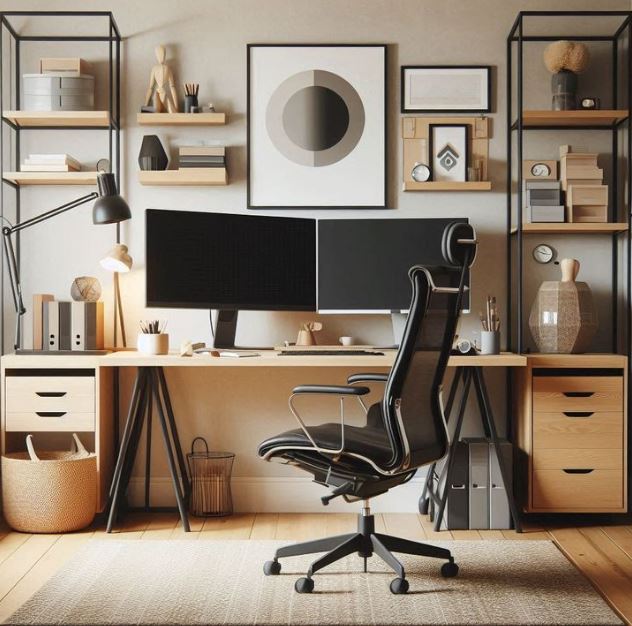
Choosing the right office setup involves more than selecting attractive desks and chairs. Businesses need furniture that fits the available floor area, supports daily workflows, provides comfortable working conditions, and complements the overall appearance of the workplace. Office Furniture Customized solutions give companies greater control over these factors because furniture can be planned around specific dimensions, employee requirements, storage needs, branding preferences, and office layouts.
For businesses in Manila and Quezon City, customized furniture can be particularly useful when every part of the available workspace needs to serve a purpose. A startup may need compact workstations, while a corporate office may require team clusters, executive desks, conference tables, reception counters, and dedicated storage. Architects and interior designers may also need furniture that follows a specific floor plan or design concept. Instead of adapting the entire office around standard furniture dimensions, customized solutions allow the furniture to work with the space.
What Is Customized Office Furniture?
Customized office furniture is furniture designed or modified according to the requirements of a particular workplace. Customization can involve dimensions, layout, materials, finishes, storage features, workstation configurations, cable management, partitions, and other functional details.
This approach is different from purchasing a standard desk or workstation directly from a showroom. Ready-made furniture usually comes in predetermined sizes and configurations. Customized furniture can be planned according to the measurements and operational requirements of the office.
For example, a business with a narrow office area may need desks with specific depths to maintain comfortable walkways. A company with several departments may require different workstation arrangements for individual teams. A management office may need an executive desk with integrated storage, while a reception area may require a counter designed around the entrance layout.
The objective is not simply to make furniture look different. The objective is to make the furniture work better within the environment.
Why Businesses Choose Customized Office Furniture
One of the biggest advantages of customized furniture is flexibility. Businesses can select furniture based on their actual requirements instead of choosing from a limited selection of predetermined dimensions.
Space utilization is another important consideration. Offices in busy commercial areas such as Manila and Quezon City may have different floor layouts, column positions, corridors, windows, and room dimensions. A customized workstation or desk can be planned around these conditions.
Customized furniture can also support a consistent office identity. Businesses may select finishes and design details that complement their existing interiors, reception areas, meeting rooms, and company branding.
Another consideration is workflow. The right furniture arrangement can make it easier for employees to access documents, communicate with colleagues, use technology, and move through the workplace. For teams that spend many hours at desks, practical workstation planning is often more valuable than choosing furniture based only on appearance.
Customized Office Furniture for Manila and Quezon City
Office requirements can vary considerably between businesses operating in different parts of Metro Manila. A compact startup office may have very different requirements from a large corporate workplace, school, healthcare facility, or government department.
In Manila, businesses may need furniture for executive offices, shared workspaces, reception areas, conference rooms, and administrative departments. In Quezon City, customized solutions can also be useful for companies, schools, institutions, professional offices, and growing organizations that need furniture designed around specific room dimensions.
Local planning also makes delivery, installation, site measurements, and project coordination important considerations. Businesses should provide accurate floor plans or request a site assessment where available before finalizing dimensions.
For larger projects, architects, interior designers, contractors, and procurement teams can coordinate furniture specifications with the overall office design. This can help reduce conflicts between furniture, electrical requirements, partitions, walkways, and other workplace elements.
What Can Be Customized?
Customized Office Furniture Customized does not have to mean creating every product from scratch. Depending on the supplier and project, businesses may be able to customize individual components or complete furniture systems.
Common options include:
- Office desks
- Executive desks
- Staff workstations
- Office cubicles
- Conference tables
- Reception counters
- Filing cabinets
- Storage cabinets
- Mobile pedestals
- Meeting tables
- Collaborative workstations
- Office partitions
- Computer tables
- Training tables
Customization may include dimensions, tabletop configuration, storage placement, finish, partition arrangement, cable-management provisions, and workstation capacity.
Some Philippine office furniture suppliers already market customized tables and workstation systems with different configurations and finishes, demonstrating the importance of customization in commercial workspace planning.
Choosing the Right Desk Configuration
The right desk configuration depends on how employees work. Individual desks can be suitable for roles that require concentration and personal workspace. Clustered workstations can support departments where employees regularly collaborate.
For teams, benching systems and multi-person workstations can help organize several employees within a defined area. Privacy panels can be incorporated where employees need some visual separation.
Executive desks usually require more surface area and storage, while compact desks can be more appropriate for smaller offices. Conference tables should be selected according to the number of people who regularly use the meeting room rather than simply choosing the largest available option.
Before ordering, measure the room carefully and consider doors, windows, columns, electrical outlets, air-conditioning units, emergency pathways, and circulation space.
Materials and Finishes Matter
Material selection affects appearance, durability, maintenance, and overall value. Businesses should consider how frequently the furniture will be used and what type of environment it will occupy.
Office furniture may use engineered boards, laminates, metal components, glass, fabric panels, or combinations of different materials. The appropriate choice depends on the product, application, expected usage, and budget.
Finishes can also influence the visual character of an office. Wood-inspired finishes may create a traditional or professional appearance, while simpler neutral finishes can work well in contemporary workplaces.
Instead of choosing a finish based solely on a sample, businesses should consider how it will work with flooring, walls, lighting, partitions, chairs, and existing furniture.
Customized Furniture and Space Planning
Furniture should be considered as part of the entire office layout rather than as individual products.
A good space-planning process considers employee capacity, circulation, collaboration areas, private rooms, storage, meeting spaces, reception areas, and future expansion.
For example, a company expecting to add employees within the next year may benefit from a modular workstation configuration that can be expanded later. A growing startup may also prefer furniture that can be rearranged when teams change.
This is one reason customized furniture can be valuable for businesses with unusual room dimensions or changing operational requirements.
How to Order Customized Office Furniture
A structured ordering process can make a custom furniture project easier to manage.
1. Assess Your Office
Start with the available floor area, number of employees, departments, and intended furniture locations.
2. Define Your Requirements
List the furniture required, including desks, workstations, storage, conference tables, reception counters, and other items.
3. Take Accurate Measurements
Record room dimensions, doors, windows, columns, electrical outlets, and other fixed elements.
4. Select Materials and Finishes
Consider durability, maintenance, appearance, and compatibility with your existing office interior.
5. Review the Proposed Layout
Before production, check the dimensions, seating capacity, circulation space, storage access, and cable-management requirements.
6. Confirm the Quote and Specifications
Make sure the quotation clearly identifies dimensions, materials, quantities, finishes, inclusions, installation, delivery, and applicable charges.
7. Schedule Delivery and Installation
For larger projects, coordinate delivery and installation with the office construction or renovation schedule.
This process gives procurement teams and business owners a clearer way to compare suppliers and reduce misunderstandings before production begins.
Common Mistakes to Avoid
Buying customized furniture without proper measurements can create unnecessary problems. A desk that looks appropriate on paper may interfere with a doorway or reduce the usable walkway once installed.
Another common mistake is focusing entirely on appearance. A visually impressive workstation may still be unsuitable if it lacks adequate storage, cable management, or appropriate workspace.
Businesses should also avoid ordering without confirming the final specifications. Dimensions, materials, finishes, quantities, installation requirements, and delivery arrangements should be reviewed before production.
Finally, consider future needs. If the company expects employee numbers to increase, choose a configuration that can accommodate expansion where practical.
How Modern Desks and Office Cubicles Can Support Your Project
Businesses looking for customized workspace solutions can work with Modern Desks and Office Cubicles to discuss furniture requirements based on office space, functionality, design preferences, and project needs. The company provides customized office furniture solutions and works with clients to select suitable office tables, cubicles, and other workplace furniture.
For a customized project, prepare your floor plan, approximate measurements, number of employees, preferred furniture types, desired finishes, and budget range before requesting a quotation. Providing these details can make the consultation more productive and help the supplier understand what the workplace requires.
If your office is located in Manila or Quezon City, discussing delivery, installation, available customization options, and project timelines in advance can also help you plan the furniture installation around your business operations.
Frequently Asked Questions
What is customized office furniture?
Customized office furniture is designed or modified according to a workplace’s specific dimensions, layout, functional requirements, materials, finishes, and storage needs.
Is customized office furniture suitable for small offices?
Yes. Custom dimensions can help small offices use available floor space more efficiently while maintaining necessary work areas and circulation.
Can office workstations be customized?
Yes. Depending on the supplier, workstation size, seating configuration, partitions, finishes, storage, and cable-management features may be customized.
Is customized furniture more expensive than ready-made furniture?
The cost depends on dimensions, materials, design complexity, quantity, and specifications. A quotation based on the actual project requirements provides a more accurate comparison.
Can businesses in Quezon City order customized office furniture?
Yes. Businesses should confirm the supplier’s service area, delivery arrangements, installation services, and customization options before placing an order.
What information should I provide when requesting a quote?
Provide room measurements or floor plans, furniture quantities, preferred designs, employee capacity, materials or finishes, delivery location, and installation requirements.
